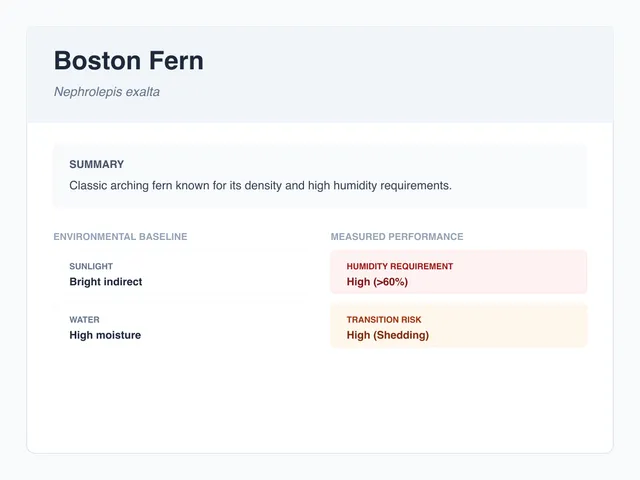
Nephrolepis exaltata
Boston Fern
Classic indoor fern with dense fronds, high humidity demand, and a strong preference for steady root moisture.
Sun Bright indirect Water Steady moisture Care High


A practical baseline for keeping indoor ferns alive by managing moisture consistency, humidity, and container size instead of relying on rituals.
Stable root-zone moisture outperforms decorative rescue tactics.
Most indoor fern failures are framed as personality flaws in the owner. That is a lazy diagnosis. The real issue is usually a bad operating environment: low evening humidity, inconsistent watering, and potting mix that turned hydrophobic after one missed cycle.
Boston fern is the fastest way to learn whether the room is suitable. Bird’s nest fern is the better fallback when the room is merely acceptable rather than ideal.
Oversized pots stay wet longer than people expect. That extra wet time reduces oxygen around the root zone and turns “helpful watering” into slow decline.
Nephrolepis exaltata
Classic indoor fern with dense fronds, high humidity demand, and a strong preference for steady root moisture.
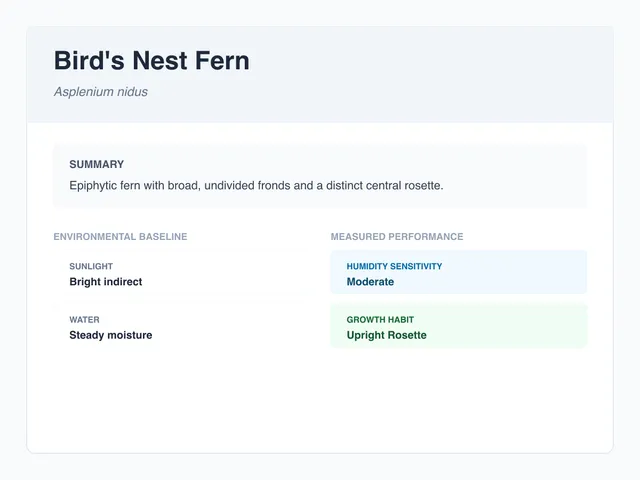
Asplenium nidus
Upright rosette fern that handles indoor life better than many frilled species, provided the crown stays dry.
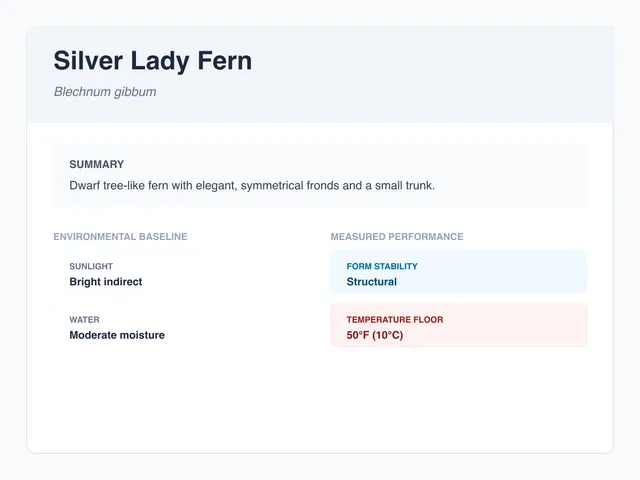
Blechnum gibbum
Compact tropical fern with a tidy habit that reads cleaner than Boston fern in smaller interior spaces.
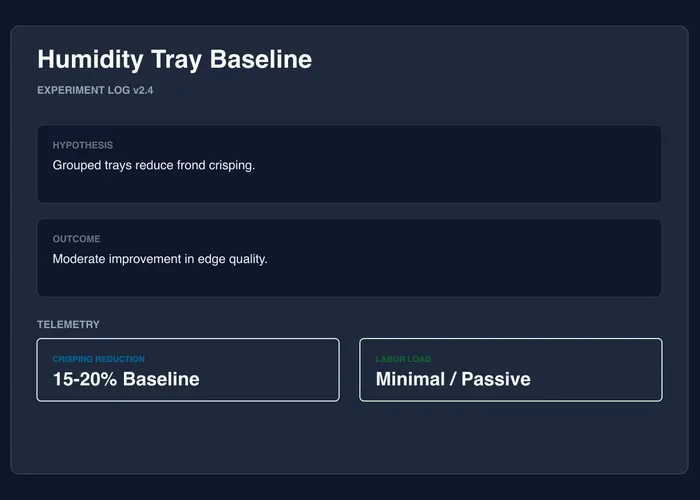
Slight reduction in edge crisping, but the bigger improvement came from more even watering and less afternoon heat exposure.
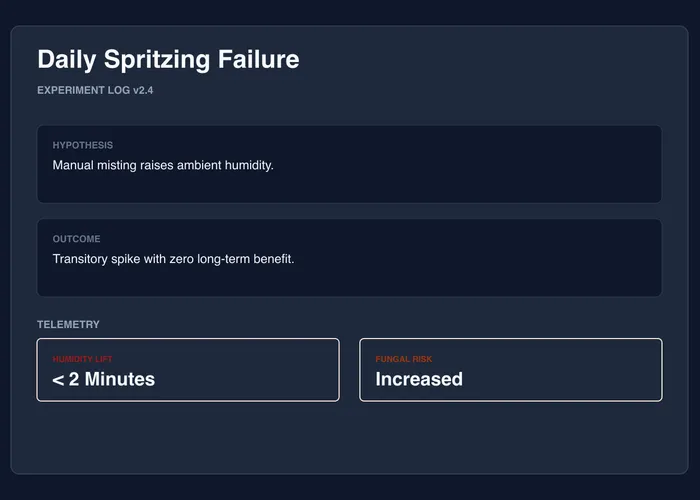
No durable improvement. Leaf surfaces looked better briefly after spraying, but edge crisping and decline pattern stayed functionally unchanged.
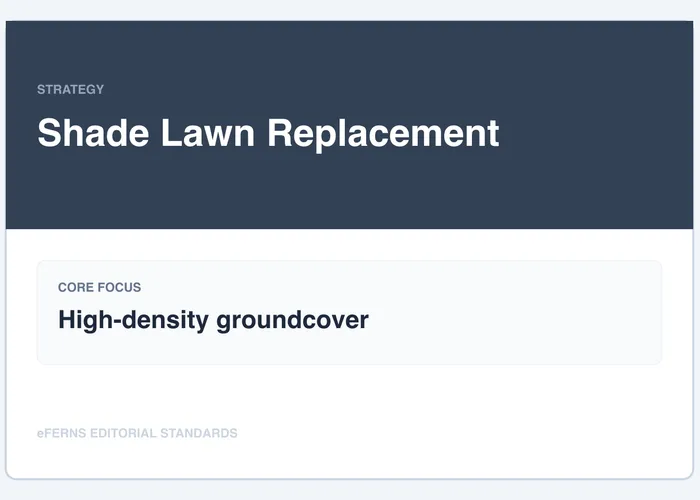
A measured workflow for replacing weak turf in filtered light with plants that tolerate root competition, moisture shifts, and low-input maintenance.

How to keep porch containers functional by focusing on placement, grouping, and irrigation consistency before adding gadget-heavy humidity systems.